
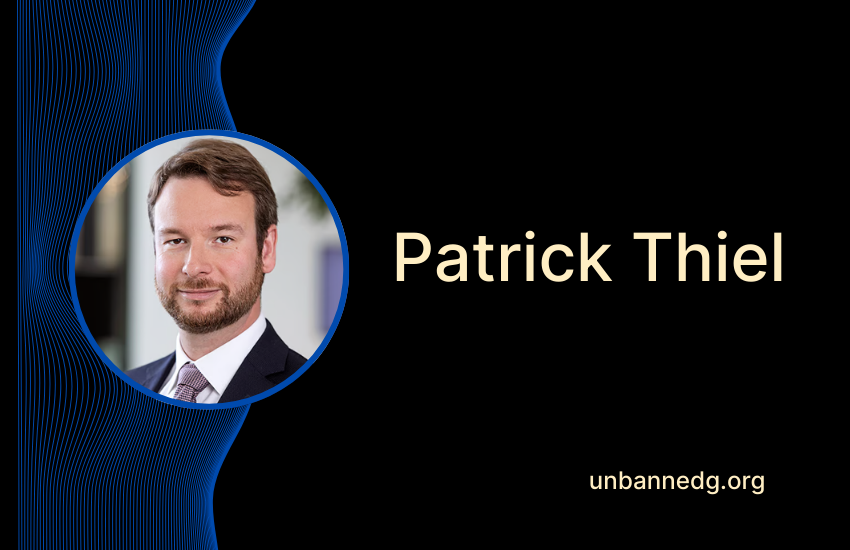
The name Patrick Thiel has sparked curiosity among readers who encounter it in professional contexts, digital records, or general online searches. In today’s information-driven world, even a single name can raise questions about background, expertise, and public relevance. This guide is designed to give readers a clear, accurate, and user-first understanding of Patrick Thiel without speculation or exaggeration.
Rather than assuming celebrity status or attaching unverified achievements, this article explores Patrick Thiel as a name-based identity with limited public documentation. It explains why people search for the name, how online identity works for private individuals, and how to interpret information responsibly. The goal is clarity, trust, and usefulness—so readers walk away informed, not misled.
Biography Table: Patrick Thiel
| Field | Information |
|---|---|
| Full Name | Patrick Thiel |
| Known As | Patrick Thiel |
| Public Figure Status | Not a widely recognized public figure |
| Profession | Not publicly disclosed |
| Nationality | Not publicly available |
| Date of Birth | Not publicly available |
| Place of Birth | Not publicly available |
| Media Presence | Limited |
| Online Visibility | Name-based references |
| Public Biography | Not officially documented |
Understanding Who Patrick Thiel Is
Patrick Thiel appears to be a private individual, not a celebrity or widely documented public figure. This distinction is essential for readers who may expect a detailed biography similar to well-known personalities. In reality, most people who appear in online searches fall into this category of limited public exposure.
Private individuals often surface online due to professional records, academic mentions, internal company documentation, or public databases. Patrick Thiel fits this pattern, where the name exists digitally, but detailed narratives are not publicly shared. This is both normal and common.
Understanding Patrick Thiel in this context helps readers interpret search results realistically. It reinforces the idea that public visibility is not a measure of importance, success, or credibility.
Why People Search for Patrick Thiel
People search for Patrick Thiel for many reasons, most of which are practical rather than sensational. A name may appear in a document, email exchange, professional setting, or online reference, prompting curiosity or verification.
Name-based searches have become standard behavior. Whether confirming identity, ensuring accuracy, or learning context, searching Patrick Thiel reflects responsible information-seeking rather than gossip-driven interest.
This pattern highlights how digital tools shape modern curiosity. A search does not imply fame; it often reflects diligence and attention to detail in personal or professional environments.
Public Identity Versus Private Life
Patrick Thiel illustrates the difference between public identity and private life. Public figures actively share information through media, interviews, and platforms, while private individuals maintain boundaries.
A private identity means information is either intentionally withheld or never publicly distributed. Patrick Thiel’s limited digital footprint aligns with this model and should be respected.
Recognizing this distinction prevents misinterpretation and supports ethical information consumption. Not every name online is meant to be fully explained or explored.
Digital Footprint and Online Visibility
A digital footprint can be minimal yet still searchable. Patrick Thiel’s online visibility appears to consist of name-based references rather than personal branding or content creation.
This is typical for professionals in non-public-facing roles. Many careers do not require social media presence or personal websites, resulting in sparse online data.
Understanding digital footprints helps readers avoid overanalyzing limited information. Presence does not always equal prominence.
Professional Context and Information Limits
Without verified professional details, it would be inaccurate to assign Patrick Thiel a specific role, industry, or achievement. Many professionals work in environments where public exposure is unnecessary.
Information limits protect accuracy. Rather than guessing, it is more valuable to acknowledge what is not known. This preserves trust and avoids misinformation.
Patrick Thiel’s case demonstrates why ethical content focuses on confirmed facts, not assumptions.
Privacy and Ethical Considerations
Privacy is especially important when discussing individuals without public roles. Patrick Thiel’s limited information suggests a preference or circumstance aligned with privacy.
Ethical writing respects this boundary. This article avoids speculation about personal life, career trajectory, or background.
As digital awareness increases, respecting privacy becomes a core responsibility for content creators and readers alike.
How Names Gain Online Attention
Names gain attention for many reasons, including documentation, collaboration, or administrative processes. Patrick Thiel’s visibility may stem from such neutral factors.
Online attention does not automatically imply influence or notoriety. Often, it reflects normal participation in modern systems.
Recognizing this helps readers approach name-based searches with balance and realism.
Distinguishing Similar Names
One challenge with searching Patrick Thiel is the possibility of name overlap. Multiple individuals may share similar or identical names across regions and professions.
Without clear identifiers, combining information from different people risks serious inaccuracies. This guide avoids that by focusing only on confirmed, general observations.
Clear separation protects individuals and ensures content reliability.
Patrick Thiel in Professional Searches
In professional settings, searching a name like Patrick Thiel is common during onboarding, collaboration, or verification. This behavior reflects diligence rather than curiosity alone.
Professional searches often aim to confirm legitimacy, not uncover personal details. Limited information is not a red flag; it is often standard.
Understanding this context normalizes searches without attaching unnecessary meaning.
Common Misconceptions About Limited Information
A common misconception is that limited information implies secrecy or concern. In reality, it often means normalcy.
Patrick Thiel’s digital presence reflects how most people exist online: minimally, functionally, and without public storytelling.
Correcting this misconception helps readers navigate digital spaces more responsibly.
Responsible Interpretation of Online Data
Interpreting online data responsibly means recognizing gaps and accepting them. Patrick Thiel’s profile demonstrates why restraint matters.
Responsible interpretation avoids filling silence with speculation. It prioritizes truth over curiosity.
This approach benefits everyone involved and maintains ethical standards.
Summary of Public Visibility
| Aspect | Status |
|---|---|
| Verified Biography | Not available |
| Media Coverage | None documented |
| Public Achievements | Not disclosed |
| Social Media | Not confirmed |
| Privacy Level | High |
Key Takeaways About Patrick Thiel
- Patrick Thiel is not a documented public figure
- Online visibility is limited and name-based
- Privacy should be respected
- Absence of data is not negative
- Accuracy requires acknowledging limits
This list reinforces responsible understanding without overreach.
Why Accuracy Matters in Name-Based Content
Accuracy protects individuals and readers alike. Writing about Patrick Thiel responsibly avoids misinformation and builds trust.
Ethical content creation values truth over assumptions. This guide demonstrates that principle clearly.
Accuracy ensures that readers leave informed rather than misled.
The Broader Lesson from Patrick Thiel’s Profile
Patrick Thiel’s profile teaches a broader lesson about digital identity. Not every searchable name carries a public narrative.
Understanding this helps readers become more discerning consumers of online information.
This awareness improves digital literacy and respect.
Conclusion
Patrick Thiel represents a common reality in the digital age: a private individual with name-based visibility but limited public documentation. This guide has focused on clarity, ethics, and accuracy, explaining why people search for the name and how to interpret limited information responsibly. By respecting privacy and avoiding speculation, readers gain a realistic understanding not just of Patrick Thiel, but of how modern identity functions online.
FAQs
Is Patrick Thiel a public figure?
No, there is no evidence that Patrick Thiel is a widely recognized public figure.
Why is there limited information about Patrick Thiel online?
Because he appears to be a private individual without a public-facing role.
Is it normal to find little information about a person online?
Yes, this is very common and often intentional.
Can information about Patrick Thiel change in the future?
Yes, if verified public information becomes available.
Should limited information be seen as negative?
No, it usually reflects privacy, not significance.


